New Website! Find Us At www.arkinet.com

That virtual blue sticker up top has been heralding our website launch for some time now, and the time is finally ripe… We’re ONLINE!! After a few minor setbacks last year, we decided started afresh and build the platform we originally envisioned–an all-in-one magazine, network and services hub for sharing architecture and connecting architects–as a live, interactive project. Starting with a English/Spanish magazine (right now showing articles in both languages) that also integrates a “Your feeds” feature that enables you to keep abreast of your favorites news sources, we will be scaling the platform over the next few months using the latest software to incorporate a sophisticated network and innovative web-based services. You can already register, and we’re looking forward to implementing your valuable feedback in order to make this the most international, fun and useful architecture resource on the web. All of our blog posts are now on the website, and we’ll be keeping the blog for further updates, corporate announcements and random or relevant thoughts. A huge thanks to all our readers and twitter followers who have motivated us each and every step of the way, we hope you stick with us! What are you waiting for? Go check it out!!
Ephemicropolis | Peter Root
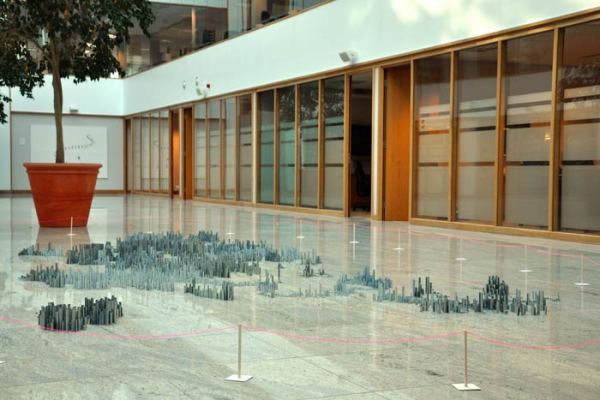
Ephemicropolis 2010 is an installation by Peter Root made with 100,000 staples that were broken into varying sizes from full stacks about 12cm high down to single staples. These stacks were then stood up and arranged over a period of 40 hours. Approx floor area 600x300cm
Carl De Keyzer | Vestiges of Colonial Congo

Belgian photographer Carl De Keyzer has compiled a series of powerful images of the remnant colonial structures in modern Congo into a new book titled Congo (belge). In collaboration with architecture historian Johan Lagae and in anticipation of the Democratic Republic of Congo’s 50th anniversary of independence from Belgium this June, the book offers a different reading of the nation’s complex colonial past. Photographs of the once-glorified and now-abandoned factories, missions, prisons, mines, military sites and harbours built by the Belgians shed light on the stark realities and consequences of colonization. Read more…
Archigram gets ready to OPEN their ARCHIVES

We’re really excited about the new unveiling of the Archigram’s archives, with more than 4,000 drawings, models and audio tapes produced by Archigram that have been catalogued and digitised over the past years. After 40 years of being stored in garden sheds, under beds and in cupboards, the archive of the 1960s collective Archigram will be available to the public on a special website.
Vladimir Shukhov
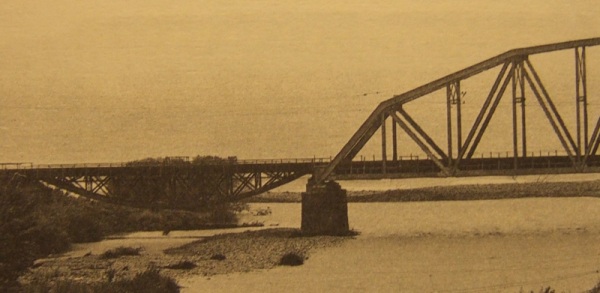
Vladimir Shukhov was born in a town of Graivoron, Belgorod Oblast, into a petty noble family. He was a Russian engineer-polymath, scientist and architect renowned for his pioneering works on new methods of analysis for structural engineering that led to breakthroughs in industrial design of world’s first hyperboloid structures, lattice shell structures, tensile structures, gridshell structures, oil reservoirs, pipelines, boilers, ships and barges.

Docomomo International y la Fundació Mies van der Rohe organizan un ciclo de debates en el marco del programa “Coup de Dés”, una oportunidad para abordar la arquitectura y el urbanismo del movimiento moderno en las ciudades mediterráneas orientales y para analizar las intervenciones contemporáneas. El objetivo es ofrecer un panorama de la praxis arquitectónica en la región mediterránea.
Drop City

Drop City was an artists’ community that formed in southern Colorado in 1965. Abandoned by the early 1970s, it became known as the first rural “hippie commune”, as described by John Q McDonald. It was one of the most famous countercultural experiments in communal living of the decade and was famous for its early use of the geodesic dome and Zome architecture, Drop City won one of Buckminster Fuller’s Dymaxion awards.
WEB | Amazing Future
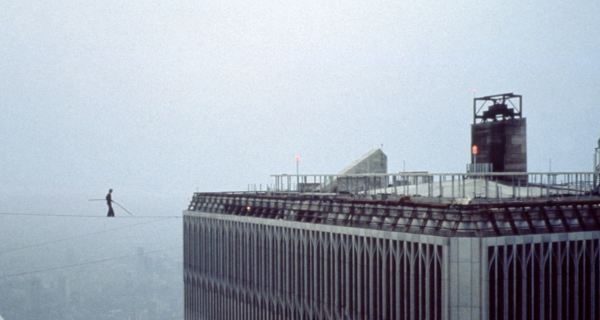
From time to time, we love to feature awesome or interesting websites we find during those rare moments of procrastination… We just discovered Amazing Futures, a compendium of great images related to the past and, as we understand, using this background to predict the present and future. Mostly all images have no related info, where they come from or the events they are associated with, but they are so diverse and interesting that it’s definitely worth a look.
World Trade Center de Cornellà | Primer Premio Aplus 2010

De nuevo nuestros amigos de mateoarquitectura comparten con nosotros una gran noticia: El World Trade Center de Cornellà, obra del arquitecto Josep Lluís Mateo, ha recibido el Primer Premio Aplus 2010 en la categoría “Arquitectura para el trabajo”. Veamos la reseña del proyecto:
CERN Diptychs | Frédéric Delangle

Delangle is a French photographer that has studied photography at the department of the University of Paris between 1989 and 1994, then he began working as a photographer for the student newspaper, and since then has worked as a freelance photographer, focusing on landscapes and architectural photography. Here we have talked about the magnificent CERN building and now, we just discovered this fantastic photographic work, so here they are:
 arkinet